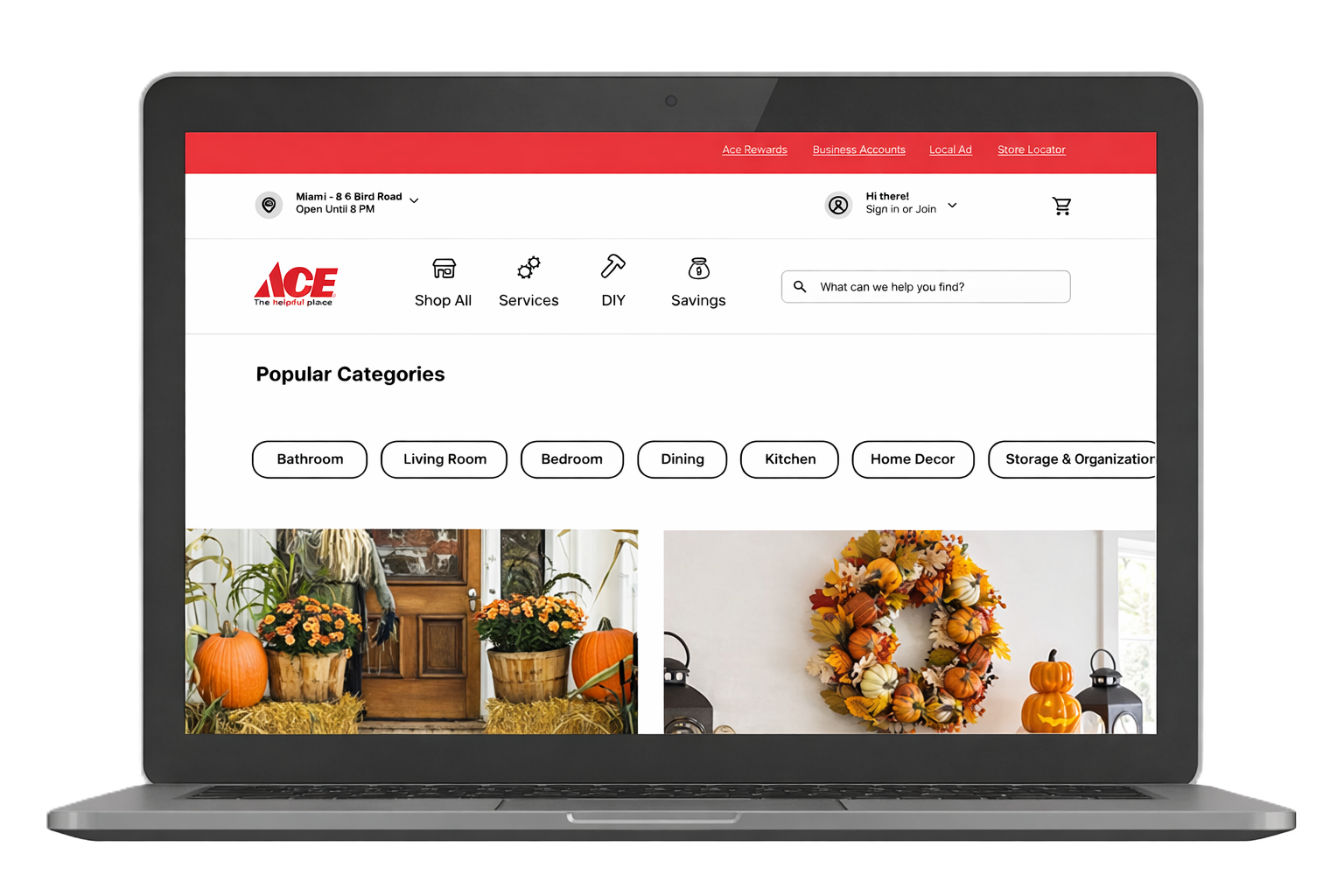
From Inspiration to Checkout: A DIY Feature for Ace Hardware
By: Victor Cabral, UI Lead & Prototyping Specialist

Client
Ace Hardware
Overview
Ace Hardware needed a way to help DIYers confidently complete projects while increasing engagement and reducing reliance on third-party tutorials.
My Role
UI Lead & Prototyping Specialist
Timeline
6 weeks
Helping DIYers Complete their Projects from Start to Finish
Ace Hardware offers a wide range of home improvement products for DIYers, but its existing website focuses primarily on shopping rather than project guidance. As a result, customers lack the planning support needed to move from idea to completed project confidently.
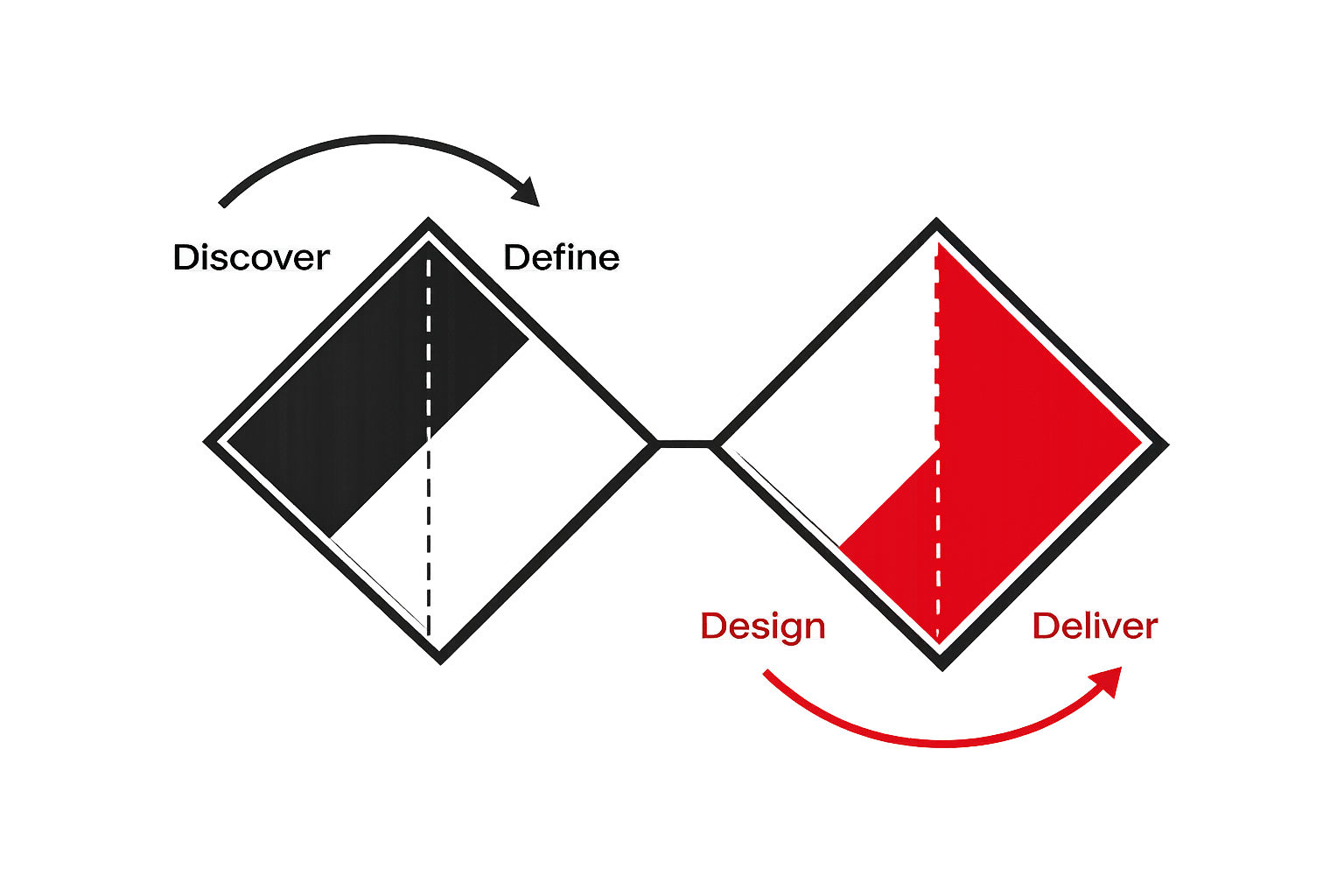
The Double-Diamond
Process
-
Interviewed DIYers who had completed a project within the last 12 months, revealing that uncertainty and overwhelm at the start of a project were common due to missing materials, surprise costs, and lack of clear guidance—challenging the assumption that DIYers prefer to work without help.
-
Defined the core problem as providing guided support throughout the entire project journey, framing the challenge as how to move DIYers from inspiration to checkout while intentionally deprioritizing a community forum concept (“Ace Space”) due to low relevance in user interviews.
-
Designed the experience around end-to-end guidance, helping DIYers plan, budget, and complete projects from start to finish, while intentionally de-emphasizing community features in favor of clear structure and industry-standard patterns.
-
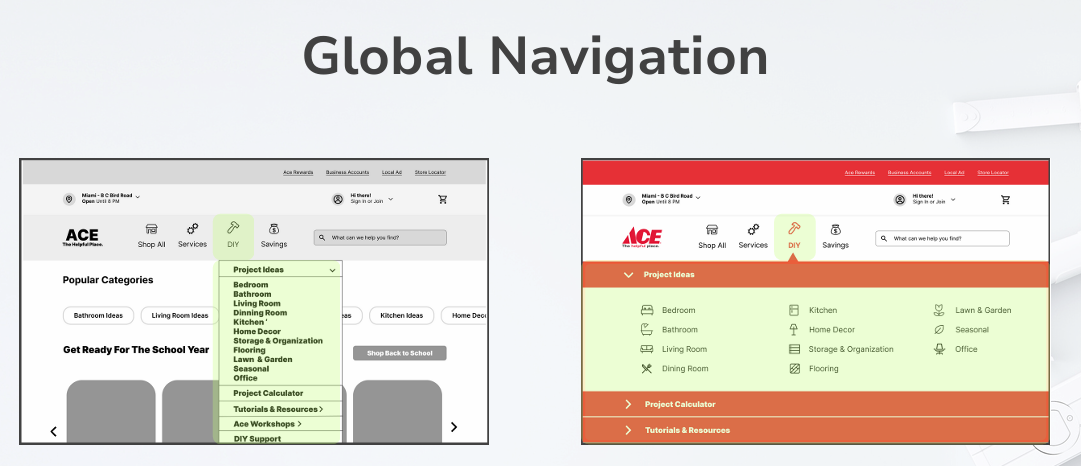
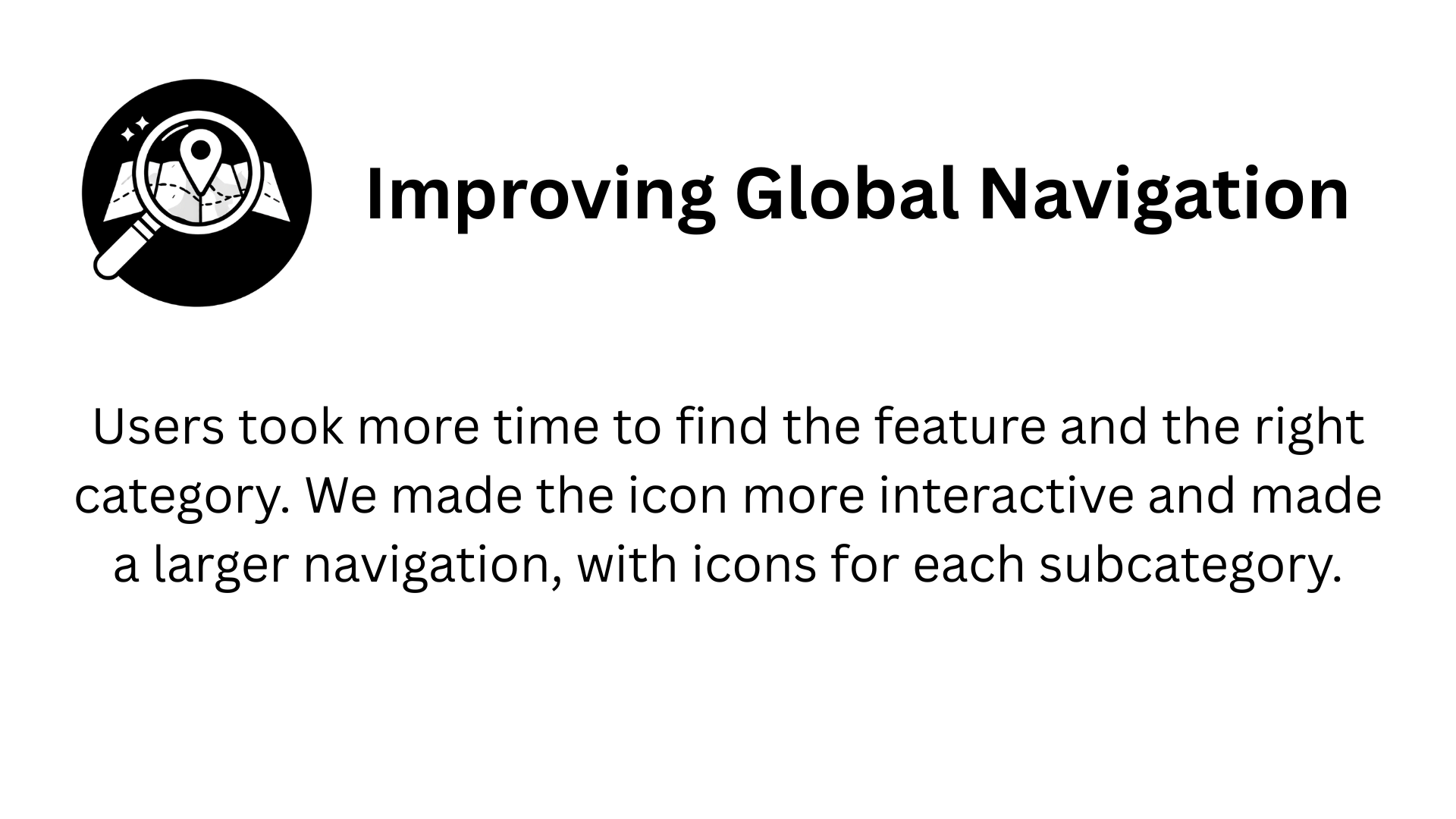
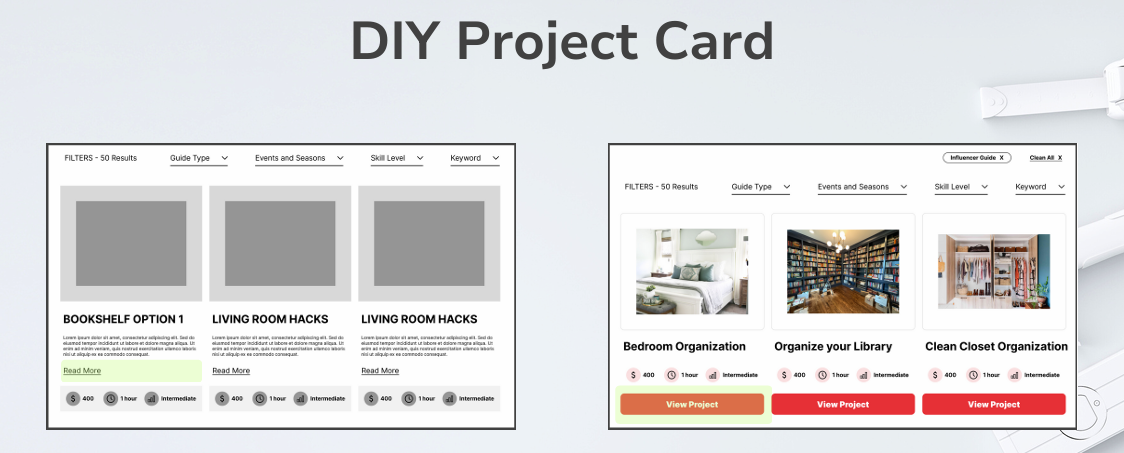
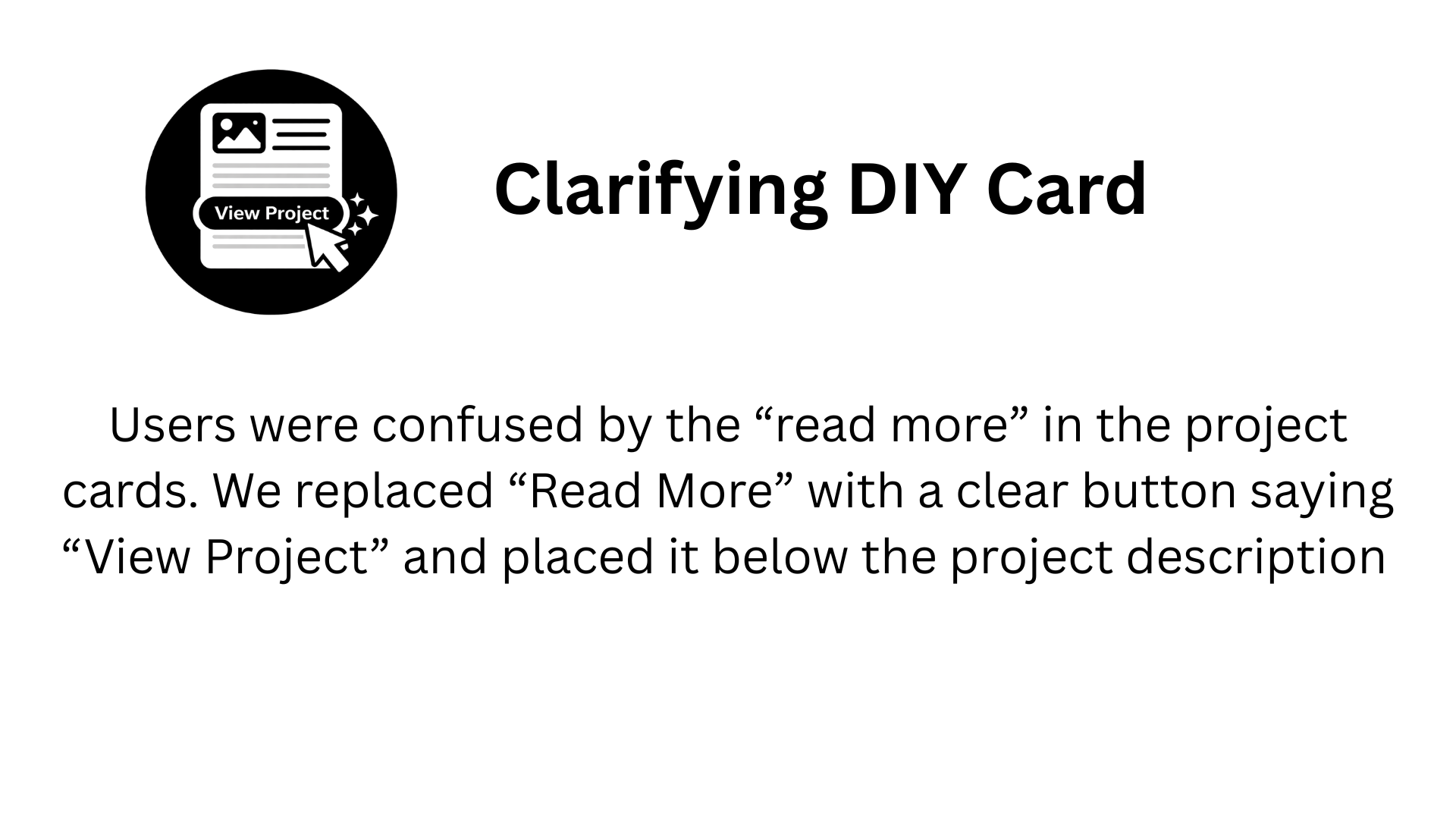
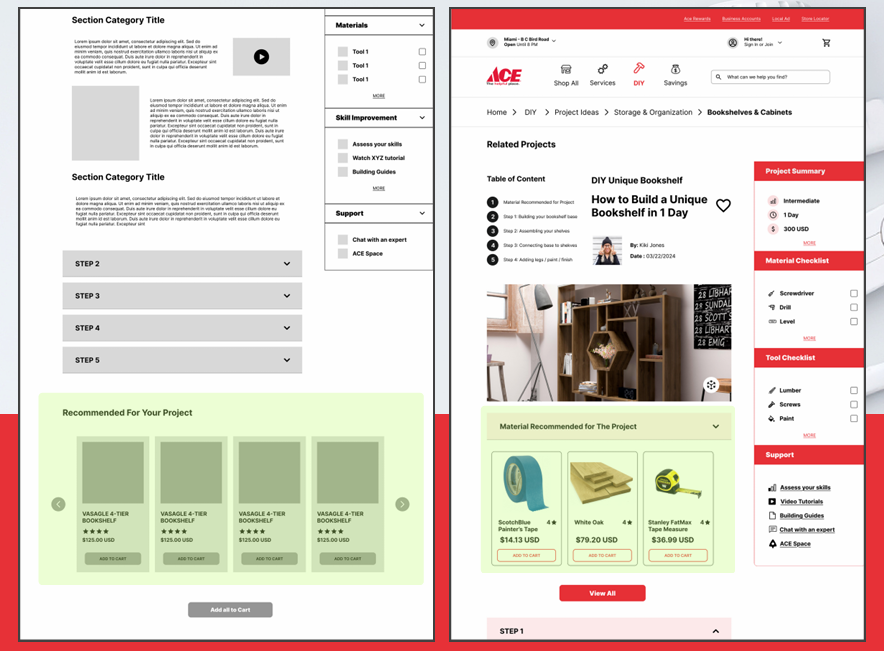
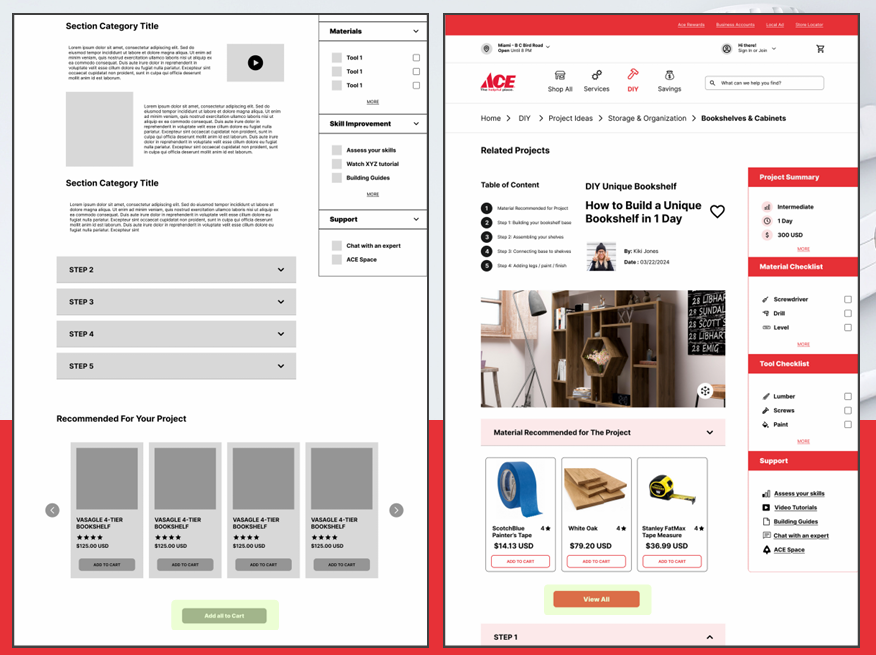
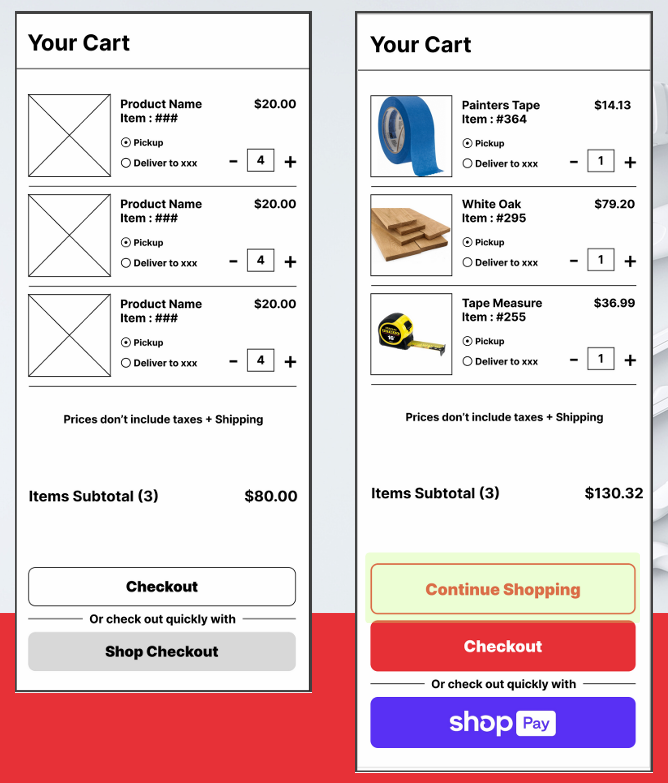
Created and tested an interactive prototype with three participants to validate that the primary task flow—selecting and completing a DIY bookshelf project—was intuitive, leading to refinements in global navigation, project card clarity, page layout, and adherence to industry standards.
“If you want something done right, do it yourself.”
-Hank, DIYer
Understanding DIYers’ Needs
“I often lose track of my expenses and spend more than I would have liked.”
-DIYer
To better understand DIYers, we conducted interviews with people who had completed home projects in the past 12 months. These conversations revealed common challenges around budgeting, planning, and finishing projects with confidence.
Budget Conscious
Users care about how much they spend on materials and tools for their projects.
Completion Focused
Users get satisfaction from seeing their products reach completion.
Detail Challenged
Users often struggle to find materials, tools, and instructions necessary to complete their projects.
Problem Statement
DIYers are motivated by creativity and personalization, but often struggle with planning, selecting the right materials, managing costs, and feeling confident in their skills. Without clear guidance and accessible support, projects can feel overwhelming, lead to unexpected expenses, and fall short of their intended vision.

Persona
Hank Strong

Bio
Hank Strong (43) is a small business owner in Texas who enjoys tackling DIY projects his own way. He values creativity, saving money, and finishing what he starts, but small details can slow him down. While building a custom bookshelf as a birthday gift for his girlfriend, Hank needs clear guidance and realistic planning to avoid costly mistakes.
Frustrations
Uncertainty and overwhelm when starting a project
Difficulty visualizing outcomes before committing
Missing materials and surprise costs mid-project
Lack of clear direction or guidance
Needs
Clear inspiration that feels achievable within his budget
All required materials and tools in one place, without guesswork
• Clear project planning with realistic costs, timelines, and step-by-step guidance
• Reassurance and support when he gets stuck, from start to finish
Solution
The Ace Hardware DIY Feature helps users take projects from idea to completion with confidence. It provides clear steps, realistic cost estimates, timelines, and material recommendations—making planning and purchasing easier. With built-in inspiration, tutorials, and community support, Ace becomes a reliable partner throughout the DIY process.
Ideation
Exploring and refining solution concepts through sketching and rapid iteration.

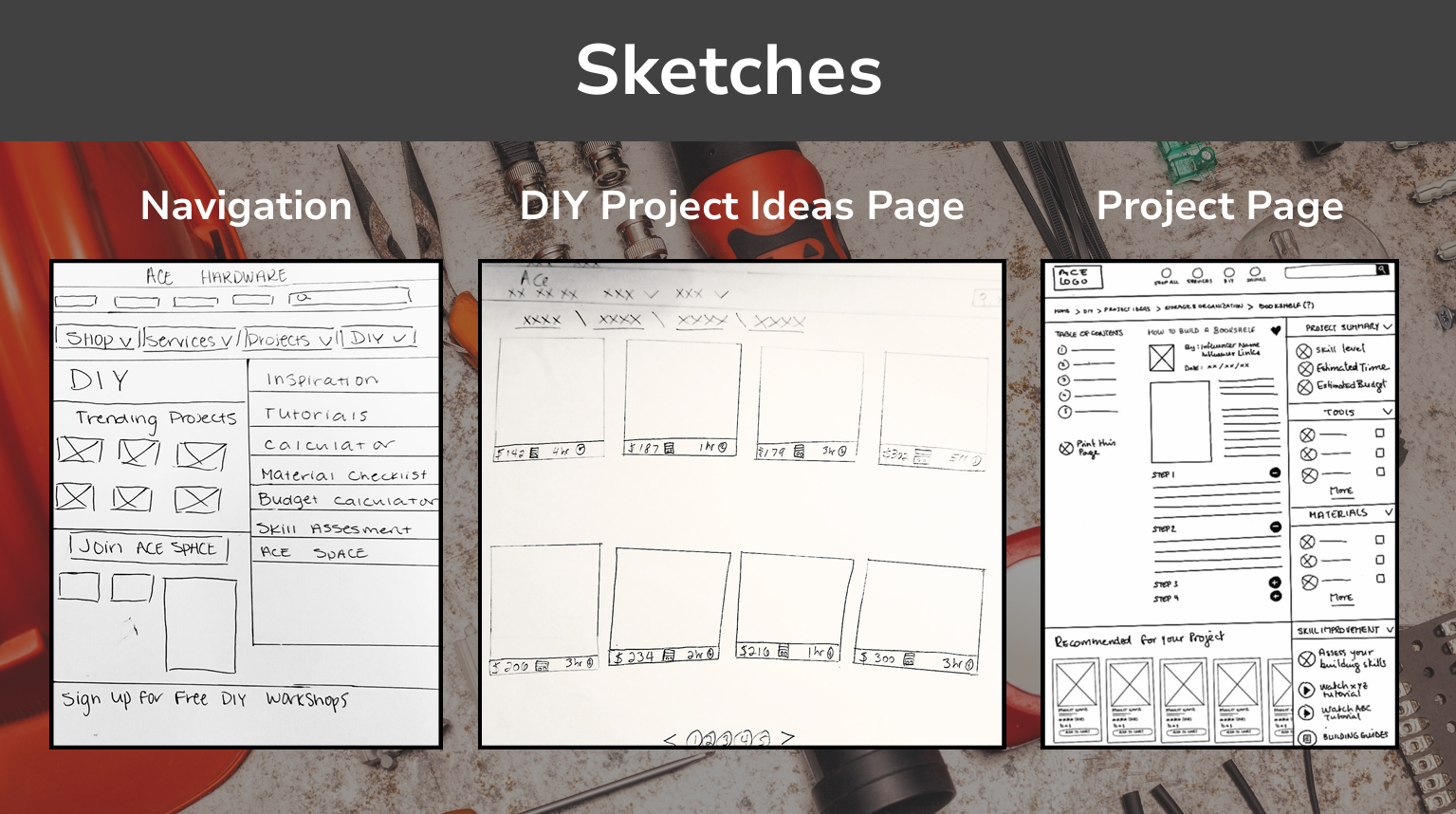
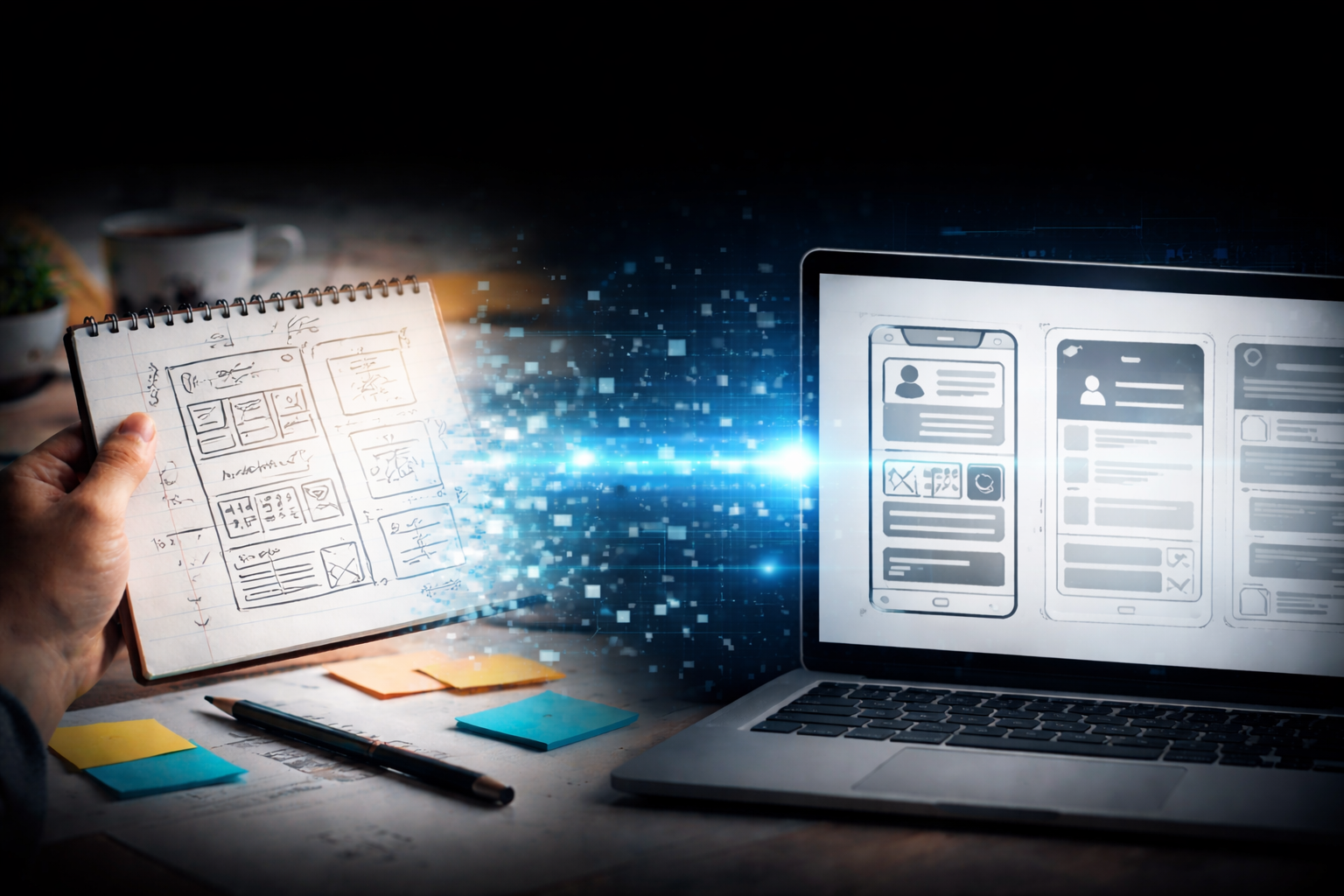
I explored multiple layout directions through sketching to understand how DIYers plan, navigate, and complete projects.
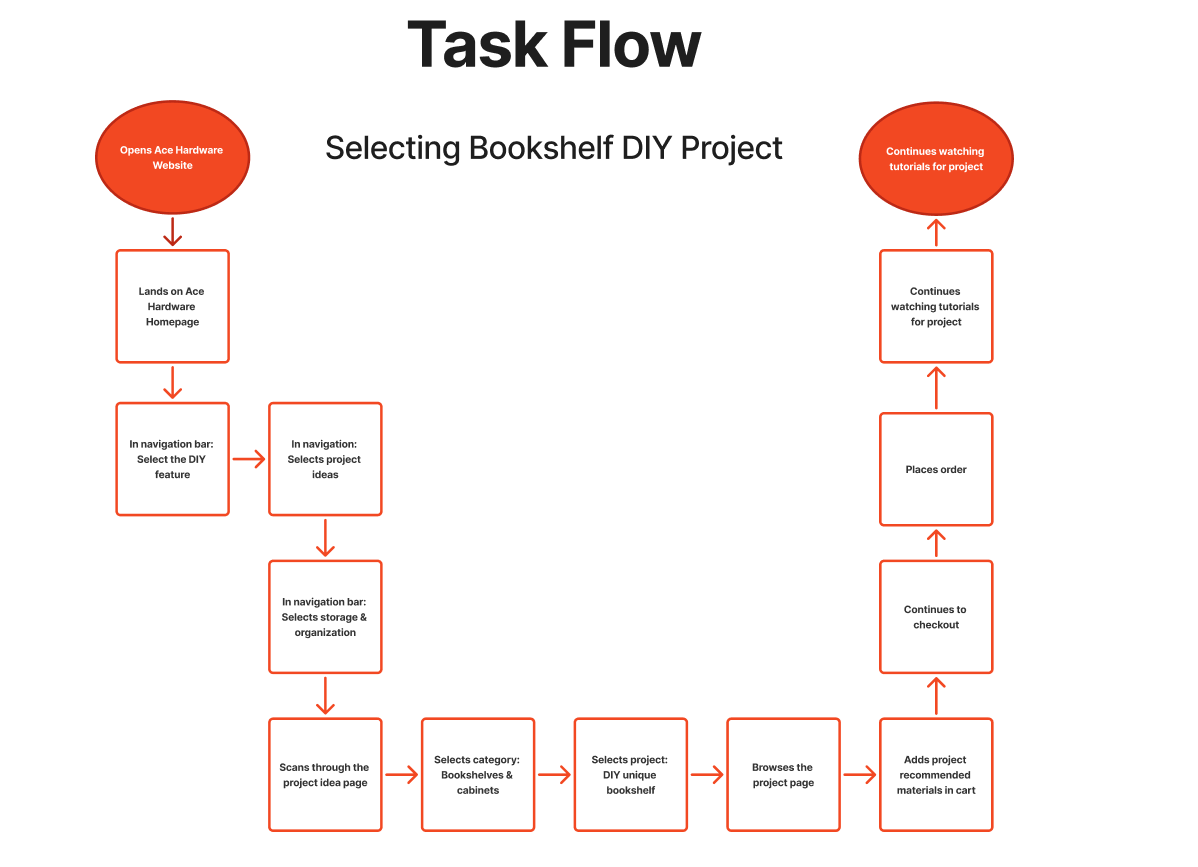
To ensure DIYers can find everything they need to complete their projects, I mapped the critical steps in the experience.
Agile Methodology
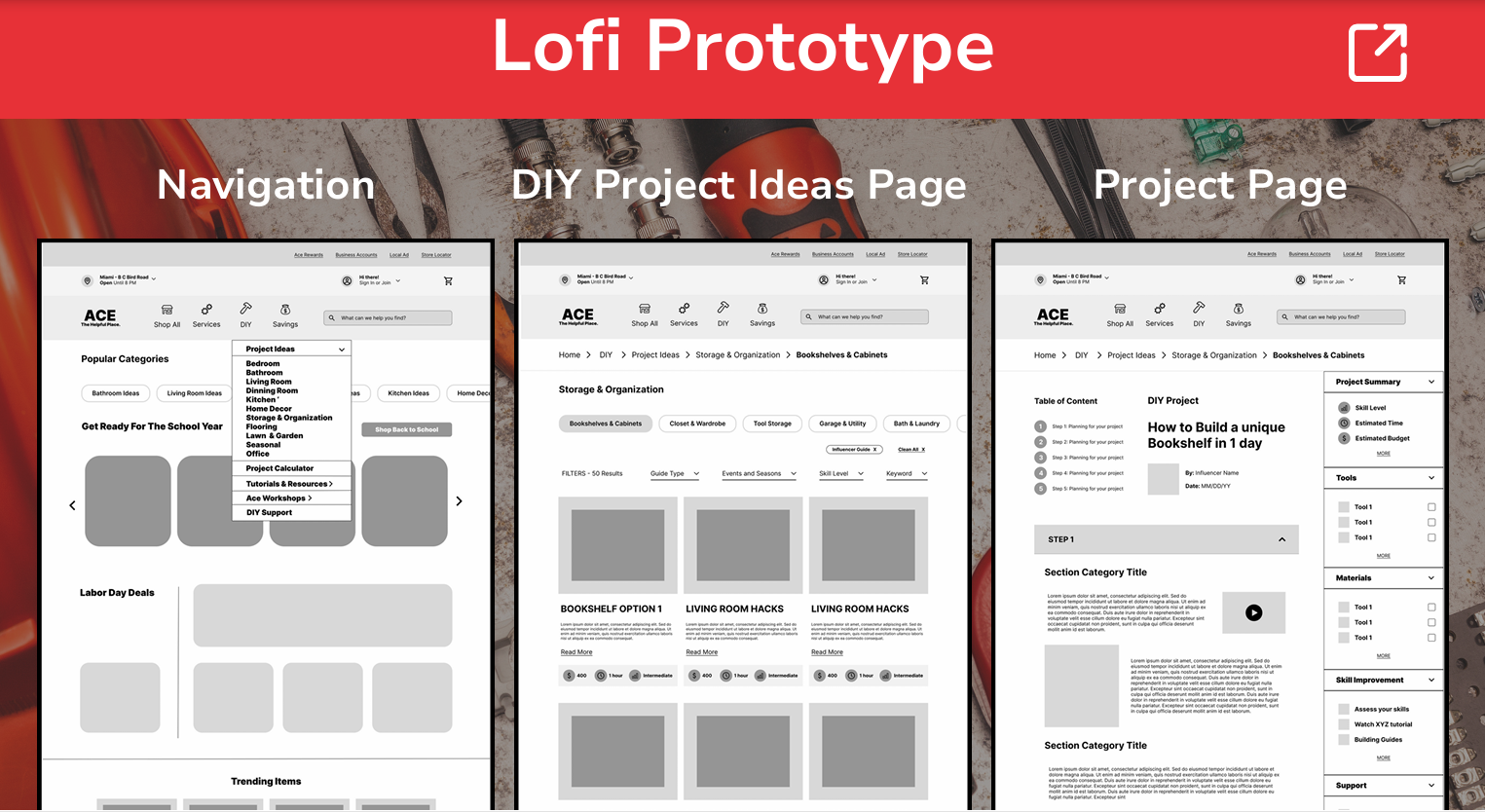
The low-fidelity prototype shown here on the left, created in Figma, served as the backbone of the website and was used for usability testing to ensure the interfaces within the website were intuitive.
Key Insights from Usability Test
Key Takeaways
Designing within an existing product requires balancing new features with established patterns
Clear structure and prioritization are essential when solving complex, multi-step user flows
Collaboration across different perspectives strengthens both usability and design decisions
Closing
This project reinforced the importance of designing solutions that feel intuitive within an existing system.
By aligning user needs with familiar patterns, the experience becomes both seamless and easy to adopt.
Explore the final prototype below.
Final Product
The final prototype brings structure, confidence, and guidance together into a seamless DIY experience, helping users plan projects, choose materials, and complete builds with clarity.