From Uncertainty to Confidence: A Tutoring Website for Parents
By: Victor Cabral, UX/UI Interaction Design Lead
Overview
Our client needed online visibility and a clear way for parents to contact his tutoring business.
Client
Propel Math Tutoring
My Role
UX/UI Interaction Design Lead
Timeline
6 weeks
Helping Students Overcome Math Anxiety
Propel Tutoring helps students build confidence in math, but its existing online presence didn’t clearly communicate trust, credibility, or how parents could get in touch.

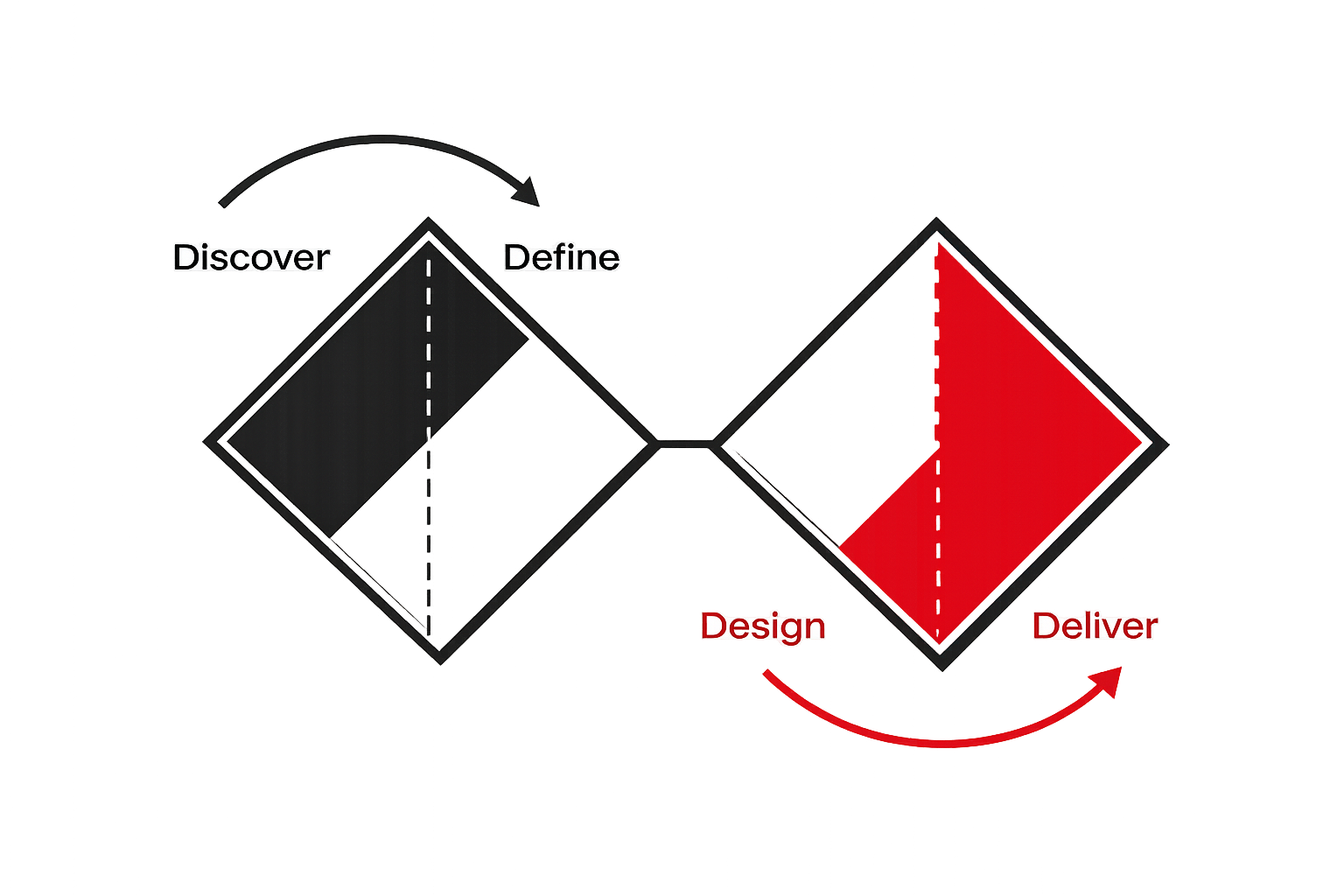
The Double-Diamond Process
-
Interviewed parents of middle schoolers to understand how they evaluate tutoring services, uncovering that a lack of transparency around teaching style, personality, and trust signals made it difficult to choose a tutor with confidence.
-
Defined the core problem as earning parents’ trust early, focusing on clarity and human connection while intentionally deprioritizing advanced scheduling features due to technical constraints.
-
Designed the experience around transparency and reassurance by clearly communicating tutor credentials, teaching approach, and soft skills—prioritizing guided information over feature complexity.
-
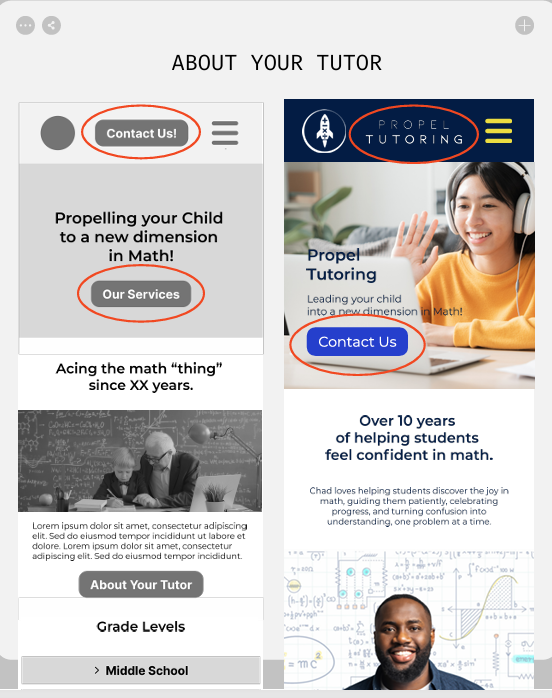
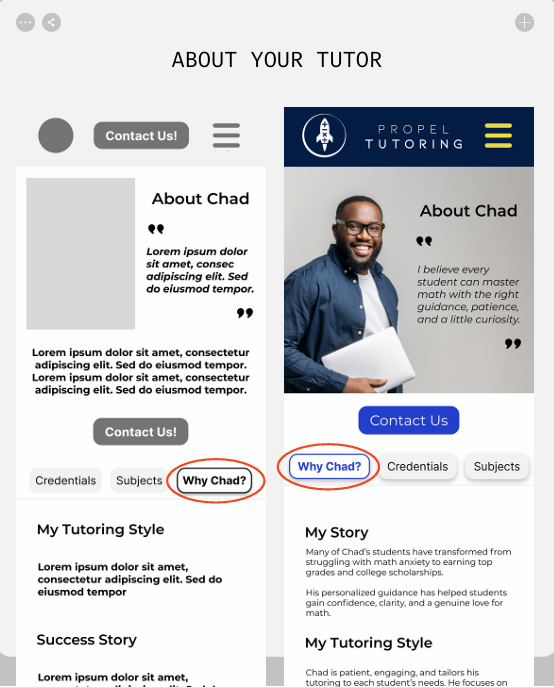
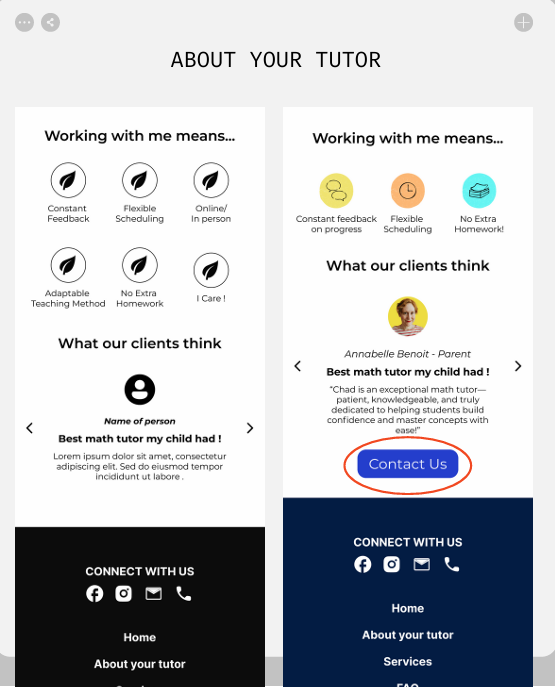
Prototyped the website and conducted usability testing with five participants to validate that the primary task flow—initiating first contact with a tutor—was clear and frictionless, leading to targeted refinements around branding clarity, CTA visibility, and human connection.

“I used to struggle with math in my youth until I met my math teacher, Mrs. Barkly. More than math, she taught me that the right teacher can make all the difference.”
-Chad, Owner of Propel Tutoring

Understanding parents’ needs
“My son liked it when he could relate to his tutor.”
-Parent
To better understand users, we conducted interviews with parents who had hired tutors for their children in the last 12 months. From these conversations, we gathered valuable insights into what’s most important to them.
Peer-influenced
Users rely on referrals from other parents to find tutors.
Credential-Minded
Users need someone reliable, a person with a certification to help their child.
Connection-Seeker
Users want tutors their children can connect with.
Defining the problem
Parents rely on tutors to support their child’s learning and confidence, yet most tutoring platforms lack transparency and human connection.
Key details like teaching style, approach, and personality are often unclear, while credentials and reviews don’t always feel trustworthy.
As a result, parents feel uncertain about who to trust and hesitate to commit.

Persona
Prisha Patel

Bio
Prisha Patel (36) is an e-commerce consultant and mother of a 14-year-old struggling with Algebra.
She values education deeply and is determined to find a tutor who can build real understanding and confidence, not just improve grades.
However, searching for the right tutor has been frustrating, unclear, and time-consuming.
Frustrations
Tutor credentials are unclear or buried
Communication feels rigid and impersonal
Teaching styles feel one-size-fits-all
Little visibility into her daughter’s progress
Extra homework without meaningful improvement
Needs
A tutor who connects with her daughter
Focus on understanding over grades
Alignment with school curriculum
Clear credentials, reviews, and teaching approach
Feeling confident before committing
Solution
Propel Tutoring provides parents with clear, trustworthy information to confidently choose the right tutor. The platform highlights qualifications, teaching style, subjects, and grade levels, supported by authentic reviews from parents and educators.
Parents can communicate directly with tutors through familiar tools like email or text, making it easy to stay informed about progress. At its core, the experience prioritizes student confidence, motivation, and supportive learning relationships.
Ideation
Turning solution ideas into reality with pen and paper.

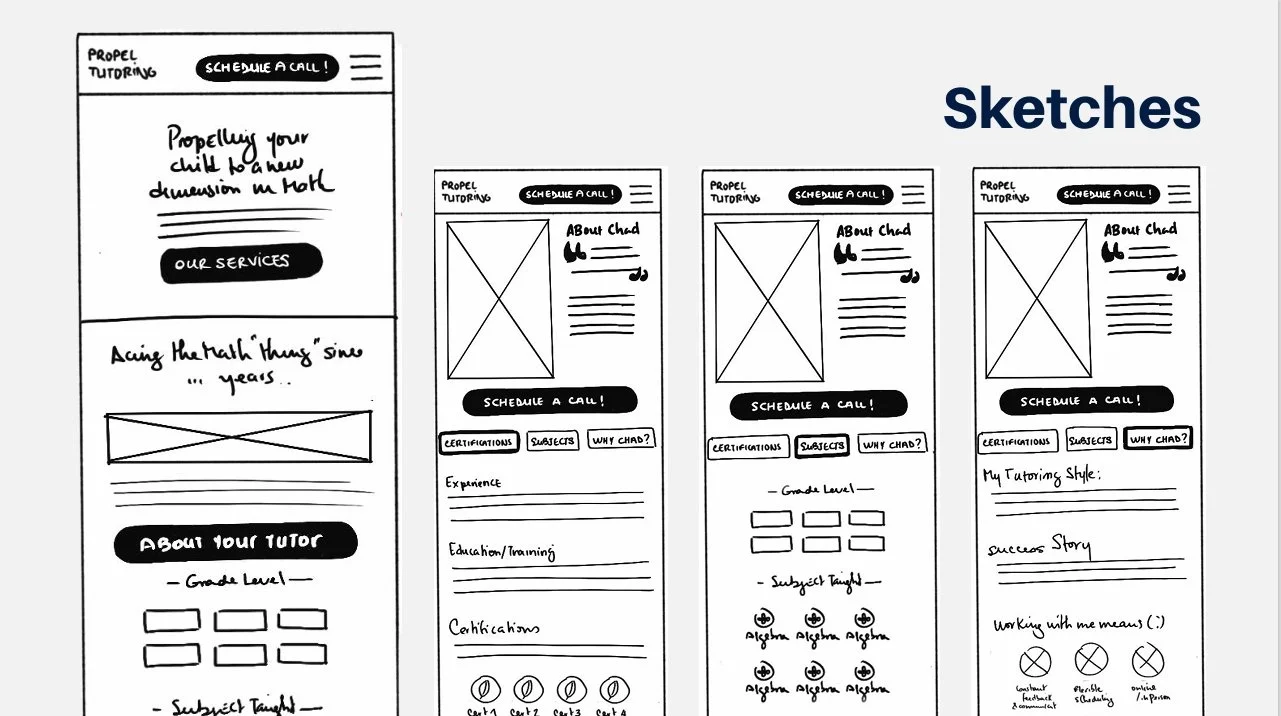
I sketched multiple layout directions to explore how tutor credentials, teaching style, and personality could be surfaced early without overwhelming parents.
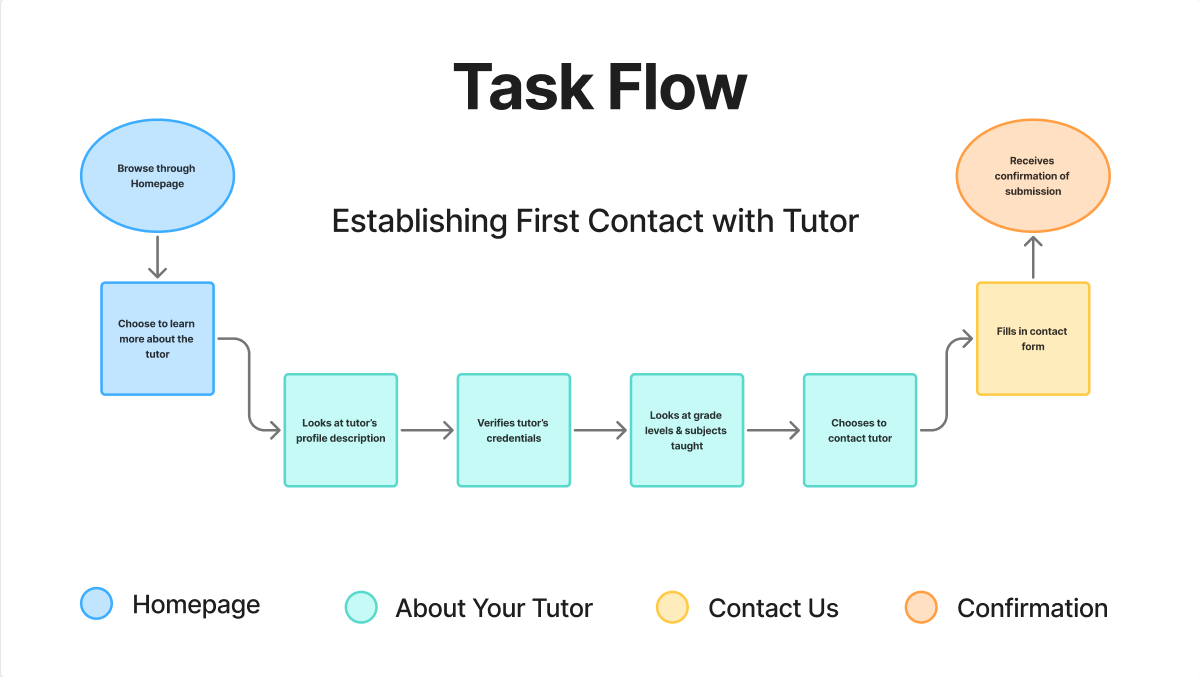
To ensure parents could confidently move from browsing to first contact, I mapped the critical steps in the experience.

Agile Methodology
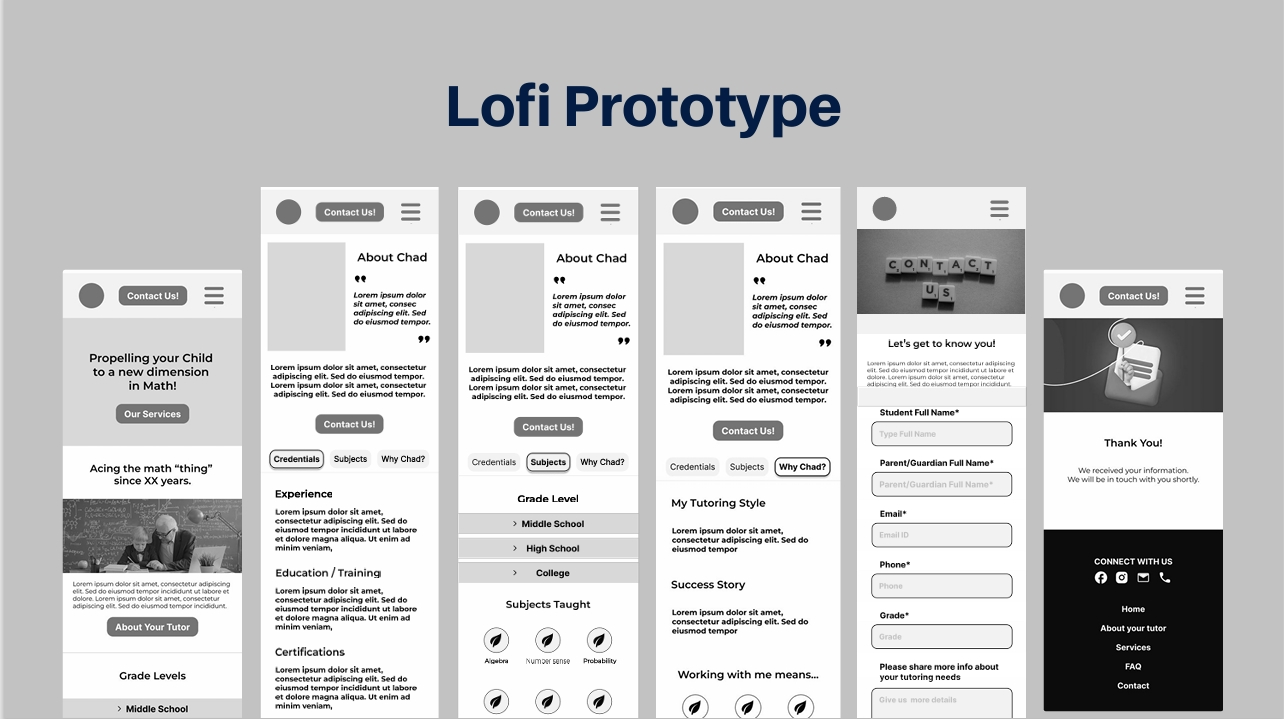
The low-fidelity prototype shown here on the left, created in Figma, served as the backbone of the website and was used for usability testing to ensure the interfaces within the website were intuitive.
Key Insights from Usability Test




Key Takeaways
Balancing user needs with client constraints leads to more realistic, effective solutions
Clear communication and collaboration are essential for aligning design decisions
Designing within limitations strengthens problem-solving and prioritization
Closing
This project reinforced the importance of designing with clarity, adaptability, and intention.
Each challenge pushed the solution to be more focused, practical, and user-centered.
Explore the final prototype below.
Final Product
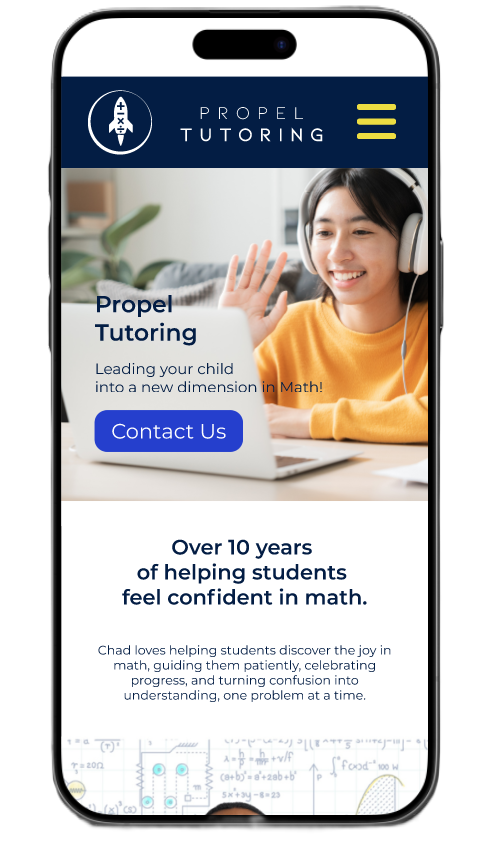
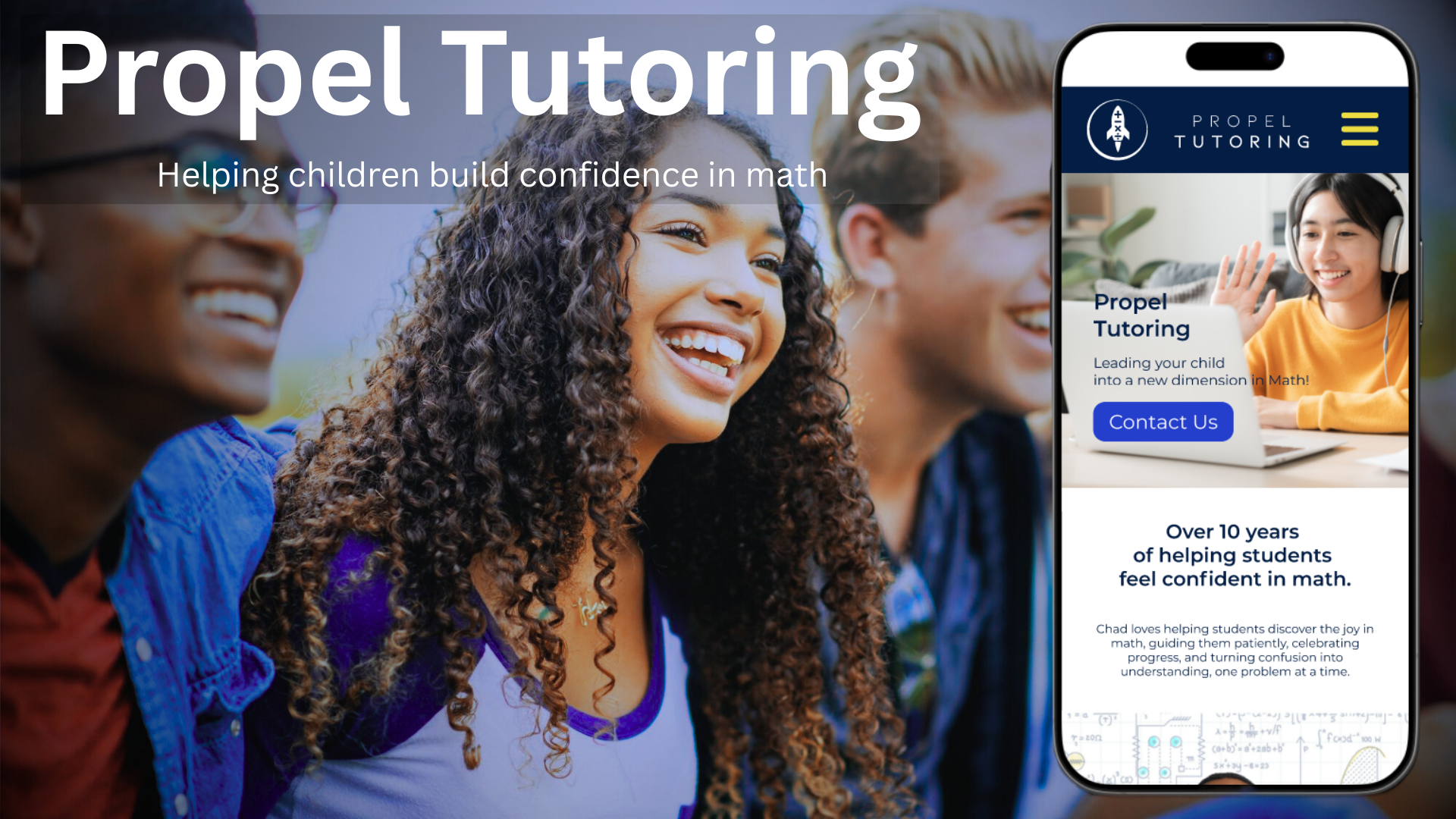
The final prototype brings clarity, trust, and human connection together into a cohesive tutoring experience.